
Sell your software company with business brokers who understand SaaS metrics, IP, and confidential data. If you are planning an exit, you need a process that protects your code, customer data, and valuation.
ValleyBiggs supports software founders with exit planning, business valuation, and buyer-ready due diligence. You can sell your software company with confidence because, aside from our goal of achieving maximum valuation, we offer a 100% success-based service with no upfront fees.
With 20 years of experience and over $2 billion in closed deals, ValleyBiggs brings M&A advisory discipline to business brokerage for technology companies.
Below, you will see how a technology business broker builds competitive buyer demand, protects confidentiality, and helps you close on clean terms.
Key Takeaways
- Software exits are won on proof, retention, margins, and defensible intellectual property, not just a pitch deck.
- Confidentiality is a deal lever, we control what buyers see, when they see it, and how they access it.
- Buyer competition drives price, we run a structured outreach process across strategic buyers, private equity, and family offices.
- Success-based fees align incentives, ValleyBiggs works on no-upfront-fee terms, so the focus stays on closing.
Importance of Specialized Business Brokers for Software Companies
Software deals move fast when the story is supported by clean metrics and clean ownership of the product. Our team positions your recurring revenue, IP, and infrastructure so buyers can say “yes” with fewer open questions.
Translate SaaS metrics into a buyer-ready value story
To earn premium offers, ValleyBiggs helps you package the numbers buyers underwrite: ARR, churn, gross retention, net revenue retention, and cash efficiency.
- Net revenue retention (NRR) proves expansion, so buyers see durable growth without relying on new logo acquisition.
- Gross retention shows “leak rate,” which directly affects forecast risk and financing terms.
- Rule of 40 discipline gives buyers a quick read on growth versus profitability tradeoffs.
- Gross margin clarity separates a real software business model from a services-heavy operation.
In a 2025 benchmarking update from KeyBanc Capital Markets and Sapphire Ventures, private SaaS companies forecast ARR growth rising from 15% (2024) to 20% (2025), with gross retention expected to approach 90% and net retention staying above 100%.
Protect intellectual property before buyers start technical due diligence
Buyers do not just buy revenue, they buy enforceable rights. We help you tighten IP ownership so a diligence review does not turn into a retrade.
- Chain of title for code, contractor work, and inventions, so ownership is clear.
- Open-source compliance so license conflicts do not create legal exposure post-close.
- Third-party dependencies mapped by criticality, so buyers see operational risk and mitigation.
- Security posture documented for enterprise buyers, including policies, controls, and incident history.
Black Duck’s 2025 analysis of M&A code audits reports that 85% of transactions had license conflicts and 96% contained unpatched vulnerabilities, which is why we push sellers to get ahead of software due diligence before a buyer finds issues first.
For open source governance, we also align documentation to the Linux Foundation’s OpenChain M&A assessment checklist so your process looks credible to counsel and security reviewers.
Run a controlled M&A process that reduces retrades
Process control protects price. ValleyBiggs runs a staged release of information so you maintain leverage while buyers validate the deal.
- Exit planning, define goals, timing, and constraints (role, earnout tolerance, team retention).
- Business valuation, set a defendable range based on revenue quality and risk.
- Buyer targeting, prioritize strategic buyers, private equity, and family offices by fit.
- Confidential marketing, share a blind profile first, then a full package after qualification.
- Due diligence management, use structured Q&A and version control to avoid confusion.
- Negotiations and closing, protect key terms, reps, and liabilities through final documents.
Advantages of Hiring ValleyBiggs as a Specialized Broker
You want a broker that can market a software asset like an operator and defend it like an advisor. ValleyBiggs brings deep deal execution across business valuation, due diligence, and negotiation, while keeping confidentiality tight from day one.
Proof of execution, not promises
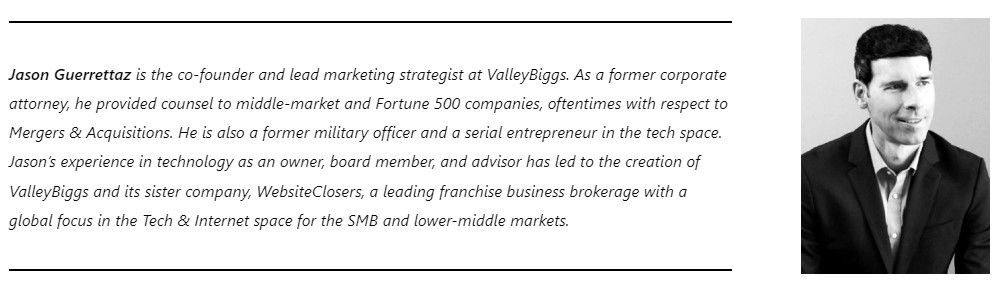
ValleyBiggs has closed over $2 billion in total transaction value and brings that discipline to software and SaaS exits.
- Deal-ready positioning, a clear thesis on what the buyer is buying and why.
- Faster buyer confidence, fewer surprises because diligence materials are organized early.
- Stronger terms, leverage comes from buyer competition and tight control of information.
Review examples of outcomes in our sold businesses library.
Buyer access that matches how software is bought
Software is often acquired by teams that run investment committee memos, security reviews, and product integration plans. Our M&A advisors prepare you for that level of scrutiny.
| Buyer Type | What They Typically Prioritize |
| Strategic buyers | Product fit, integration speed, cross-sell potential, and defensible IP. |
| Private equity | Recurring revenue quality, retention, margin profile, and add-on synergy. |
| Family offices | Stable cash flow, low customer concentration risk, and long-term durability. |
PwC noted that in the first half of 2025, US private equity deal value rose to just over $195 billion, while US-based dry powder was about $880 billion as of September 2025, which is why a tight buyer process can convert interest into funded offers.
Fees that stay aligned with your outcome
We charge fees only when a deal closes. That success-based model keeps priorities simple: protect price, protect terms, close clean.
- No upfront fees, focus stays on execution.
- Qualified buyers only, fewer tire-kickers in your pipeline.
- Confidential process, controlled disclosure through every stage.
For sellers who want to strengthen IP presentation, we also coordinate deal messaging around intellectual property and recurring revenue so buyers see defensibility, not just code.
Essential Services Offered by ValleyBiggs
Every software exit has the same risk: a strong headline price that collapses in diligence. Our advisory services are built to keep momentum while protecting confidentiality and value.
Business valuation built for recurring revenue
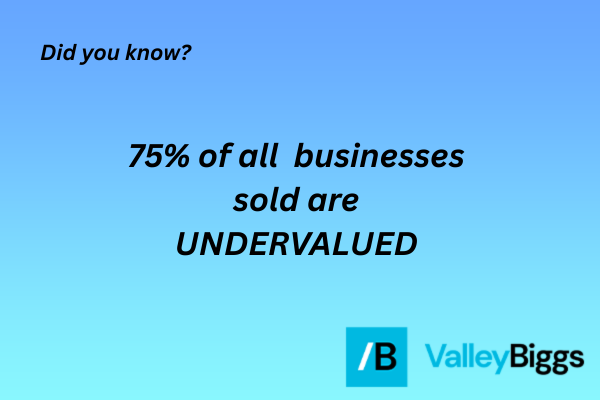
ValleyBiggs values software businesses based on revenue quality, not vanity metrics. We focus on what buyers can underwrite and finance.
- ARR and growth, so you can defend scale and trajectory.
- Retention metrics, so buyers can model durability and expansion.
- Gross margin and operating leverage, so profitability is clear.
- Customer concentration, so risk is priced correctly.
In the 2025 SaaS Capital Index update, the median valuation multiple for public SaaS companies was reported at 7.0x current run-rate annualized revenue, which is why we treat retention and margin proof as valuation drivers, not “nice-to-have” slides.
Digital marketing that reaches real acquirers
Buyer outreach is not a listing, it is a targeted campaign. Our team uses our network of buyers for direct outreach to reach the people who buy software assets.
- Segmented buyer lists by category, deal size, and thesis, to find fit fast.
- Outbound sequences that highlight your value propositions, so buyers engage.
- Analytics feedback loops using tools like Google Analytics, so messaging improves.
- Qualification filters for funding, timeline, and team capability, so diligence stays efficient.
We also coordinate with deal professionals across investment banking and business brokerage networks to widen reach without exposing sensitive details.
Due diligence management and negotiation support
Our job is to keep you out of the weeds while protecting terms. ValleyBiggs manages diligence workflow so you stay responsive without oversharing.
- Set the data room structure (finance, product, legal, security, HR) so buyers move quickly.
- Control Q&A so answers stay consistent and traceable.
- Pre-empt retrade topics (churn drivers, roadmap, hosting costs) with documented proof.
- Negotiate terms around liabilities, escrows, and earnouts, aligned to your risk tolerance.
During negotiations, we keep the focus on what matters most: price, structure, and your post-close role.
Confidentiality and privacy policy discipline
Software deals can expose customer privacy, code, and personally identifiable information if controls are loose. ValleyBiggs enforces a strict confidentiality workflow from first contact through closing.
- Staged disclosure, blind profile first, then details only after qualification.
- Least-privilege access inside the data room, so buyers see only what they need.
- Audit trails and watermarks, so you can track activity and deter leaks.
- Security basics, access controls, time limits, and clear handling rules for log files and clickstream exports.
We align this workflow to your privacy policy commitments so you do not damage customer trust while you market the business.
How to Choose the Right Broker for Your Software Company
The right broker protects value by reducing uncertainty for buyers. ValleyBiggs encourages owners to pick a team that can defend business valuation, manage due diligence, and market to strategic buyers without breaking confidentiality.
Use an operator-grade checklist
Start with proof, not claims. Ask for specifics on process, outcomes, and how they handle software risk.
- Software deal experience, ask for examples close to your business model and size.
- Valuation method, how they price recurring revenue, churn, and expansion.
- IP and open source plan, how they avoid deal delays from license issues.
- Security and cyber security posture, how they present risks and controls credibly.
- Confidential marketing plan, how they protect the web, your website, and customer communications.
If you want to evaluate ValleyBiggs specifically, review our approach to real deal experience and how we run confidential processes.
Understand fees and how they impact incentives
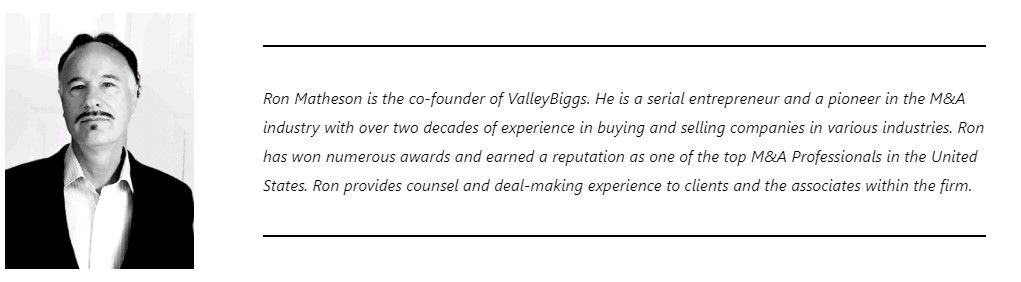
Fee structure affects behavior. A broker paid early can lose urgency, while a broker paid at close stays focused on execution.
| Fee Structure | What It Can Mean for You |
| Success-based fee | Aligned incentives, the broker earns when you close. |
| Retainer plus success fee | Can improve senior attention, but you want clear deliverables tied to the retainer. |
| Minimum fee | Common for smaller deals, it sets a floor on effort and cost. |
A 2023 fee overview from Morgan & Westfield notes that many business brokers use a “Double Lehman” style success fee schedule, which steps down as deal size increases, plus a minimum fee in many cases.
Verify buyer reach across private equity and strategic acquirers
Ask where they will find buyers and how they qualify them. A real technology business broker should show how they reach both strategic buyers and private equity, not just post a listing.
- Who owns relationships, partner-level access, not just junior outreach.
- How buyers are screened, funding, thesis, and timeline before sensitive access.
- How offers are compared, price, structure, earnout, escrows, and liabilities side by side.
- How retrades are prevented, diligence readiness and clear documentation early.
For context on buyer differences, see our overview comparing private equity and strategic buyers.
Contact ValleyBiggs Today
Get a confidential plan to sell your software company, and protect value at every step.
ValleyBiggs helps software founders move from “thinking about a sale” to a buyer-ready process built for recurring revenue, due diligence, and confidentiality.
If you want business brokers who can run a disciplined M&A process, request a consultation focused on your goals, timing, and valuation range.
Next step: Schedule a confidential review to discuss business valuation, exit planning, and how we bring strategic buyers and private equity to the table.
Contact us for a free evaluation and get started selling your software company. With our 100% success-based service, you are confident that our goal is the same as yours – to achieve maximum valuation and sell at the soonest, most reasonable amount of time.
All interactions follow privacy policy and user agreements, and include protections for intellectual property and recurring revenue data. We use web beacons, url tracking, and standard internet browser controls to support due diligence, and we can connect you with strategic buyers and private equity contacts through our business brokerage network.
FAQs
1. What does a technology business broker do when selling a software company?
A technology business broker runs the sale, they handle business brokerage tasks and offer advisory services. They lead due diligence, arrange business valuation, and work with m&a advisors during m&a activity.
2. Who buys software companies?
Buyers include family investors, investment firms, investment bankers, retail companies, and suppliers. Brokers also talk to synergy business brokers to find the best fit.
3. How does recurring revenue affect valuation?
Strong recurring revenue raises value, it shows steady cash flow and solid value propositions. That leverage helps with exit planning in any merger and acquisition.
4. What matters most about technology and product assets?
Intellectual property and research & development matter a lot for technology companies in the software industry, and buyers watch disruptive technologies and core infrastructure closely.
5. What legal and privacy checks should I expect?
Brokers run full due diligence, they check privacy policy, e-mails, web beacons, and data links on the internet. They also assess compliance rules like the US Patriot Act, check for viruses, and prepare hold harmless clauses.
6. How do brokers help market and close the deal?
They use digital marketing to show value propositions, and they advise on options and merger & acquisition terms. They may also work with commercial real estate or real estate teams and a brokerage firm to finalize the sale.